

Evolving trends, shifting user behaviors and expectations, and emerging new technologies and platforms all make navigating social media this year even more tough. And yet therein also lies more opportunities.
More opportunities for brands to experiment, to be creative and to evolve. More opportunities to broaden reach, stand out, establish recall and harness all that to corner the market. Because only those that keep in step with the changing social media landscape, adapt and innovate will survive. Thrive even.
So, yes, this could be your best social media year yet. But evolving one’s content strategies start with knowing where such strategies apply and where they can be leveraged and succeed the most.
Not all social media platforms are equal
What are the most popular or influential in your industry? What would drive the most business for your brand?
In the Philippines, Facebook still rules, with 94.9 percent of Filipino internet users aged 16 and above saying they use the platform at least once within the past month, according to the Digital 2026 The Philippines report by We Are Social and Meltwater.
YouTube is third, following on the heels of Messenger, and TikTok is fourth. Instagram rounds up the top 5. The numbers below should tell you how to leverage each platform.
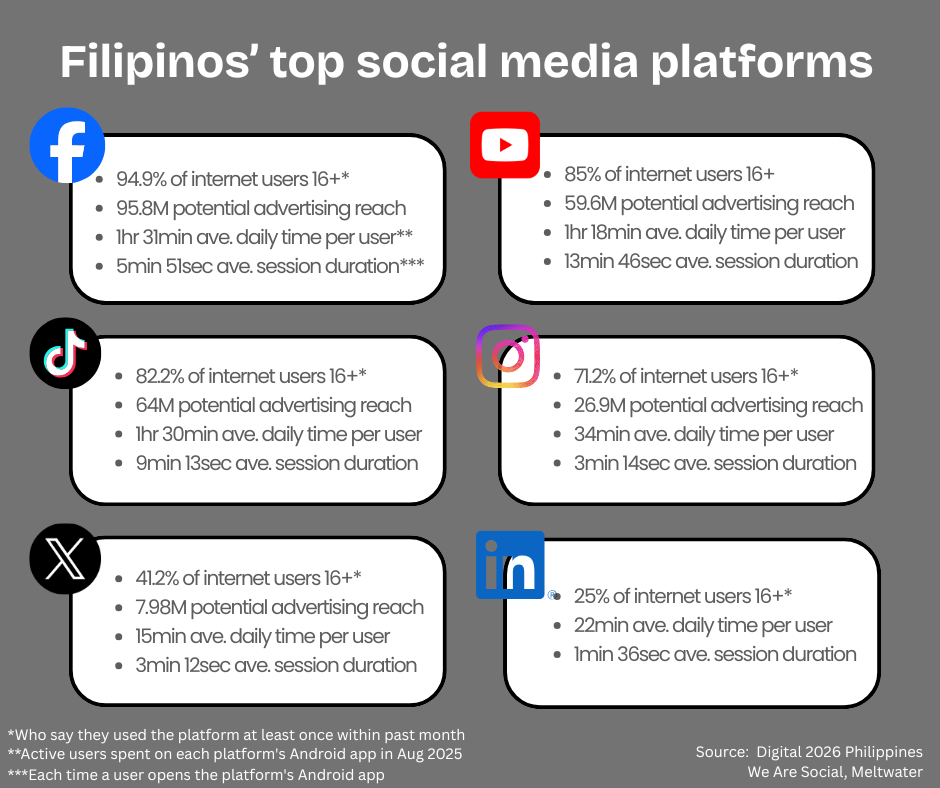
The content strategy must be clear on what platforms to use. Deciding on this means knowing where the brand’s followers go the most and where it would make all the difference. It also factors in resources available.
With social media saturation being a real thing, one question brands need to ask themselves is: Do I want to be in all platforms?
This is where knowing where one’s audiences are would matter. Because it is where they are that your brand needs to be. Investing in more platforms than necessary might be too costly, especially for smaller businesses. And if it does not pay off in terms of conversion, then it would not be a prudent strategy.
The important thing is that regardless of how many platforms used, the brand messaging must be consistent. More on this later.
So how is your social media playbook so far? Here are some more navigational tips to crush it on social media this year.
Genuine storytelling builds real connections
As cliché as it may sound, authenticity is still the goal. This cannot be overemphasized in the era of AI. It is no longer just about visually appealing material, achievement scores nor sales numbers.
It is about the connection every post makes, regardless of platform, and how that connection makes the audience feels.
Storytelling centered on human experiences makes it relatable and honest. More than sales or marketing pitches, these narratives connect emotionally with the audience, leading to trust and loyalty. The resulting strong connection boosts engagement and more importantly, enables the brand to stand out in the increasingly crowded digital sphere.
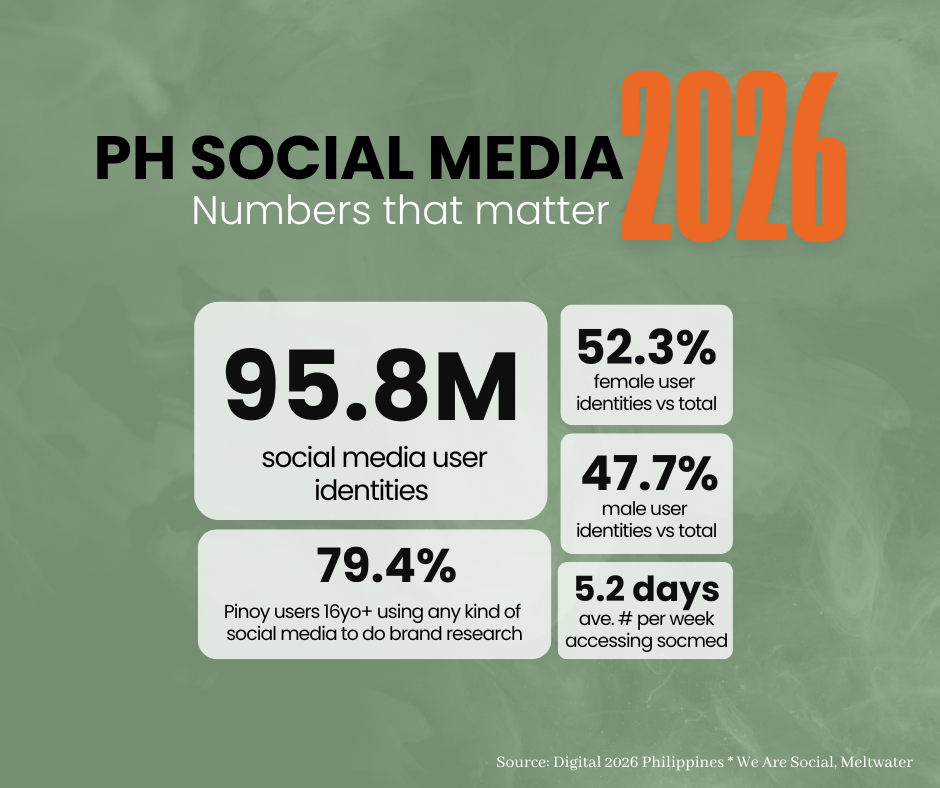
- Know the audience. Understand their needs and the type of content they prefer and value most.
- Create and stick to your brand story. Highlight brand USP or what is special about the brand. Build the narrative around, for example, the inspiration behind the business, a unique process used for making a product or an offbeat way the brand has found success in the past.
- Humanize the brand. Feature real people — the founder, employees, management team — in your content, not just the products or services. This way, the followers have faces they can connect with the brand. Try posting team photos, employee stories, and videos showing team-building activities or day in the life.
Founder-led storytelling is becoming a trend. Tap into this to highlight expertise and inspiration on top of giving the brand a persona.
A caveat though: Too much of this founder-led storytelling can be exacting as it is difficult to sustain content focused on a single person. It can also be misinterpreted as being too focused on the person instead of what the brand is or does. This type of storytelling might be misunderstood as ego-driven.
- Share BTS content. Behind-the-scenes material shows the human aspect of business. It also promotes credibility, reliability and trust. Raw BTS videos that include bloopers and fun antics make the characters and the brand real.
- Do spotlight company successes or brand and product features, but avoid the hard sell or overselling mode. Not all posts need a pitch about the company. That will turn followers away instead of build engagement.
- Show instead of tell. Rather than merely saying a product is of high quality, present specific features that guarantee strong performance. Rather than stating the company is a success, share about its actual impact on the community.

- Offer real-time content whenever possible. This communicates agility and flexibility. In the case of live events such as product launches, webinars or conferences, short clips, quotes or photos as the events unfold will tickle and hook followers. This is why social media work nowadays is beginning to look like newsroom work.
- Tap into emotions. Infuse stories with universal emotions that audiences can relate to. If your brand is all about health, for example, some posts can be about the frustration or pride one feels in keeping with a healthier diet not just the health products being offered.
- Localize content. Share content tailored to specific communities, cultures, regions or groups within your target market base. This conveys real effort to connect with them.
- Engage on issues and trending topics. But do so only with those that align with the brand’s core values. Blind trendjacking or newsjacking can be counterproductive.
- Study user behavioral and content consumption data to enhance content plan as trends and preferences shift and feeds become hyper-personalized.
Treat UGC as a key social content material
Brand authenticity and trustworthiness are now even more valuable amid widespread misinformation and manipulative content.
User-generated content is a win-win for businesses and consumers. Organic, user voice bridges the trust gap that brand messaging with its curated, paid characteristics sometimes create. Studies have shown that the majority of consumers trust UGC than traditional brand communication and favor brands that use UGC in their campaigns.
For businesses, UGC provides them with content they can already use, saving them resources in producing new material. More importantly, user-generated content serves as peer recommendations. A digital or electronic word of mouth, it is therefore a highly trusted marketing strategy.
In terms of engagement and even conversion, UGC when used in social media yields 50 percent more engagement and 29 percent higher conversion, according to Search Logistics. Even brands admit UGC contributes significantly to building connections on their social.
But UGC is not that easy to secure and sustain on social. Check out the following to boost your UGC playbook:
- Monitor follower feedback on your social. Collect and evaluate each as to alignment with brand social media goals. This is so the material actually adds value instead of simply meeting the day’s post target.
- Encourage followers to share their experiences with the brand. Hashtags, polls and other interactive content are good starting points. Many brands have done well with social media campaigns, contests or challenges that they link to a hashtag.

- Engage with followers on your social pages. If possible, explore beyond emoji reactions. Reply also to queries ASAP. All these will encourage them to share more about their stories and experiences with the brand.
- If selling products on social, try asking customers as part of post-purchase communication to share photos or feedback about their experience and/or the product itself.
- Reach out to repeat and/or loyal customers to ask them about their experience with the brand for use as social media content.
- Repost customer feedback. With their consent, of course.
Reminder: Make sure to ask permission before using a follower’s material as UGC. And credit the user. This shows not only respect for their IP rights but also good faith, which helps in relationship-building.
Collaborate with content creators
Demand for genuine storytelling is edging out sponsored posts. Micro-influencers, meanwhile, give the impression of peer advice instead of paid or sponsored messaging.
Alongside UGC, micro-influencer content generates greater trust and engagement on social media. Because of their niche expertise, micro-influencers provide content that is highly relevant to a particular brand’s audience, which yields active engagement.

Collaborating with micro-influencers can be more cost-effective but with greater conversion potential.
- Work with micro-influencers whose values and content are aligned with the brand’s.
- Do your own research. When looking for potential micro-influencer partners, you can start with agencies or influencer platforms. Your own follower base can be a source of collaborators as well.
- Vet candidates by checking their platforms and content.
- Create a brief with clear goals and expectations. Discuss these with selected micro-influencers.
- Supplement the brief with a contract that clearly outlines scope of work and deliverables, payments and terms, metrics and campaign duration. The contract should also cover confidentiality and IP, such as brand content ownership and use.
- Collaborate and keep an open communication as to the content and other details of executing such content and on which platform and when.
- Monitor and review performance.
Watch out for more hacks in the second part of this article.
Sources
https://datareportal.com/reports/digital-2026-philippines
https://sproutsocial.com/insights/index
https://sqmagazine.co.uk/reddit-statistics
https://archive.com/blog/ugc-marketing-statistics